Your incident management process currently requires manual handoffs between tools, and each audit pulls documentation from three different systems. Most teams in that setup spend hours rebuilding the same evidence trail after every incident. ServiceNow and Process Street both promise to close that gap, yet their approaches diverge sharply once you move past the sales deck.
By the end of this article you will see the exact workflow steps each platform automates, the documentation each one exports for compliance checks, and the pricing tiers that affect teams of ten versus fifty. You will also learn which buyer profile matches Process Street and which one matches ServiceNow, so the final choice is based on concrete limits rather than marketing claims.
Quick Verdict: ServiceNow vs Process Street for Incident Management
Process Street delivers faster setup and stronger policy enforcement for incident management, while ServiceNow dominates in enterprise-scale ITSM environments.
Three factors separate these platforms for incident management teams. Setup time, compliance focus, and pricing model each reveal different strengths for specific use cases.
- Setup time favors Process Street. Teams report 75 percent reduction in setup time when implementing incident workflows. Most organizations complete their initial configuration in hours rather than weeks.
- Compliance focus highlights Process Street strengths. The platform maintains SOC 2 Type II certification, ISO 27001 certification, and HIPAA compliance with BAA available upon request. These certifications support organizations handling sensitive incident data under strict regulatory requirements.
- Pricing model varies between the two approaches. Process Street offers transparent SaaS pricing without complex per-incident fees. ServiceNow typically uses enterprise licensing that scales with user count and module selection.
Teams managing incident management with strong compliance needs often find Process Street reduces configuration overhead. Organizations already invested in broader ITSM suites may prefer ServiceNow for its established ecosystem.
At a glance: how Process Street compares to ServiceNow, Process Street for Incident Management on the features that matter most.
| Feature | Process Street | ServiceNow | Process Street for Incident Management |
|---|---|---|---|
| Incident Management | ✓ | ✓ | ✓ |
What Is Process Street?
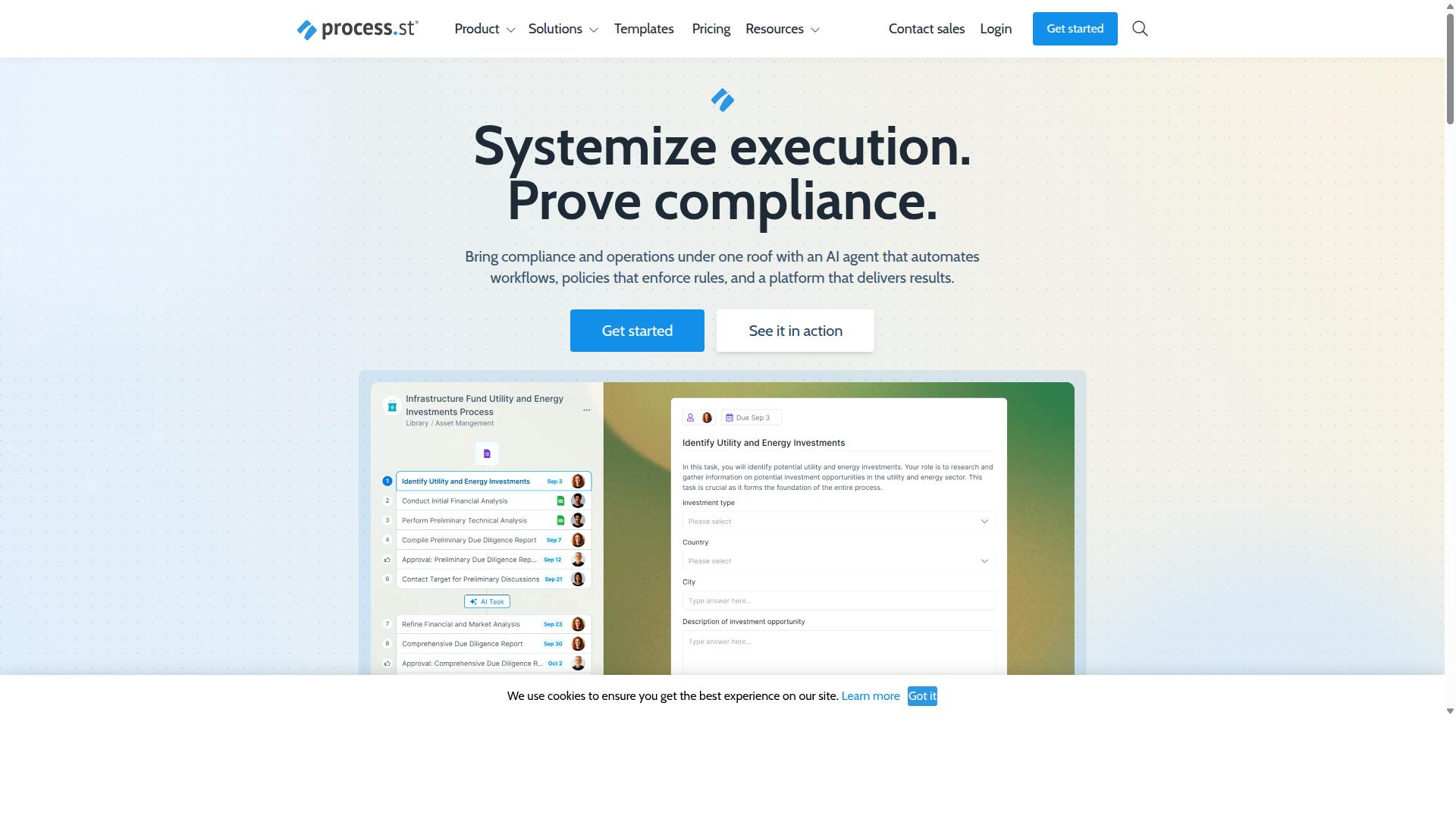
Process Street operates as a cloud-based compliance operations platform focused on workflow automation and policy enforcement.
The platform centers on three core products that work together for operational control. Docs handles document management and policy control, while Ops manages workflow automation and process orchestration. Cora serves as an AI compliance and risk agent that supports these systems.
Organizations use these products to standardize processes across teams. This approach helps maintain consistent operations across industries where incident management and regulatory requirements intersect.
Process Street supports governance frameworks including ISO 9001, SOC 2, and SOX. The platform automates business processes while enforcing policies that keep operations aligned with these standards.
Teams gain audit-ready proof through built-in documentation capabilities. This evidence supports compliance reviews without requiring separate tracking systems or manual documentation efforts.
What Is ServiceNow?
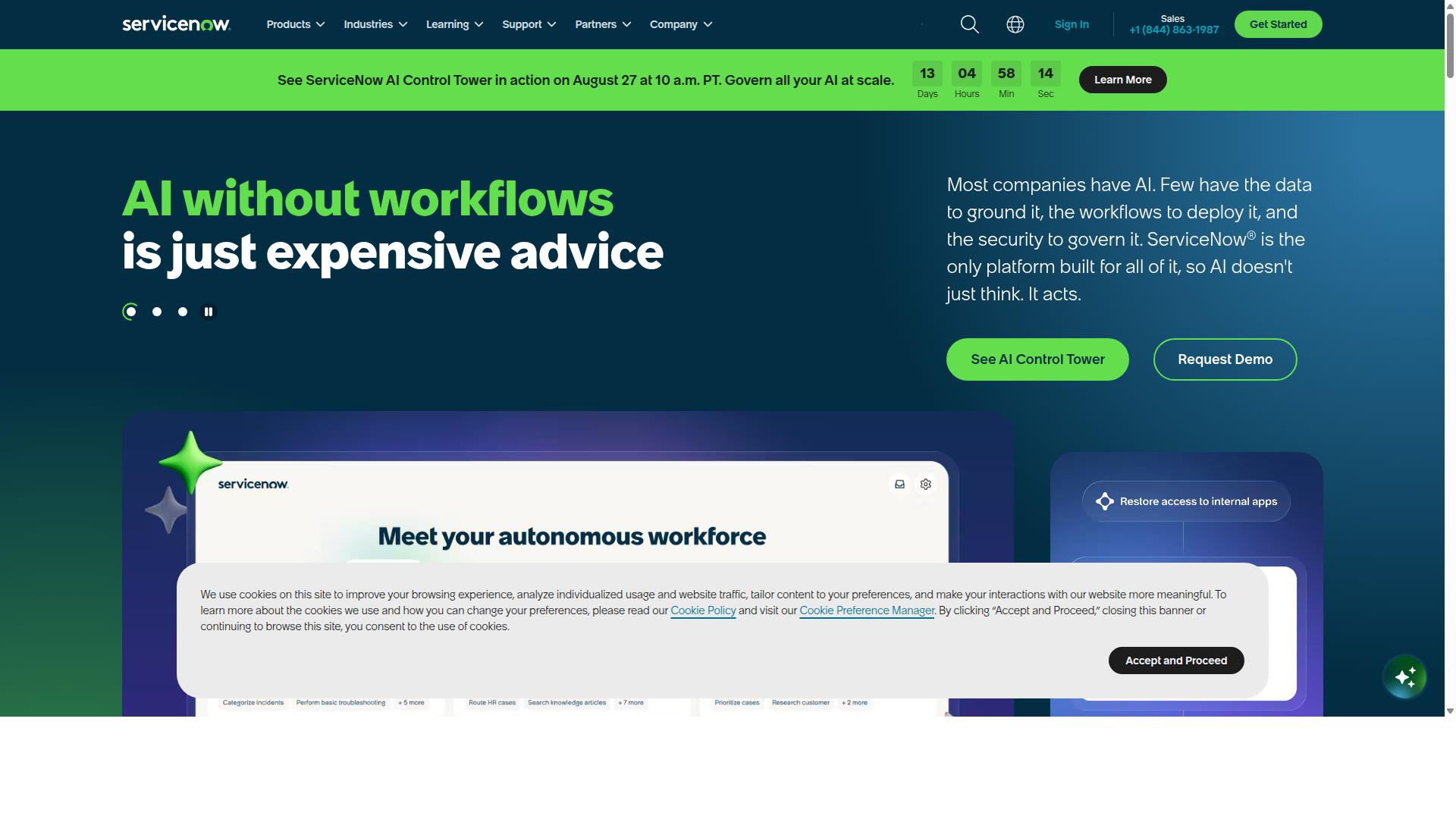
ServiceNow is an enterprise service management platform that provides ticketing, ITIL processes, and configuration management capabilities. The platform serves large organizations that need structured approaches to handling service requests across multiple departments.
ITSM capabilities form the core of ServiceNow offerings. These tools help teams manage incidents through established ITIL frameworks that define how issues get reported, tracked, and resolved.
ITOM extends beyond incident handling. This suite focuses on maintaining infrastructure visibility and ensuring systems stay operational through proactive monitoring and automated responses.
HR service management represents another major component. This area addresses employee requests and internal processes that extend beyond traditional IT support functions.
The platform handles incident management through structured workflows. Teams can categorize issues, assign ownership, and track progress against defined service levels.
Configuration management capabilities include maintaining accurate records of IT assets and their relationships. This information supports both incident resolution and broader change management activities.
ServiceNow operates primarily as a cloud-based solution. Organizations deploy the platform through subscription models that scale based on usage and module requirements.
What Is Process Street for Incident Management?
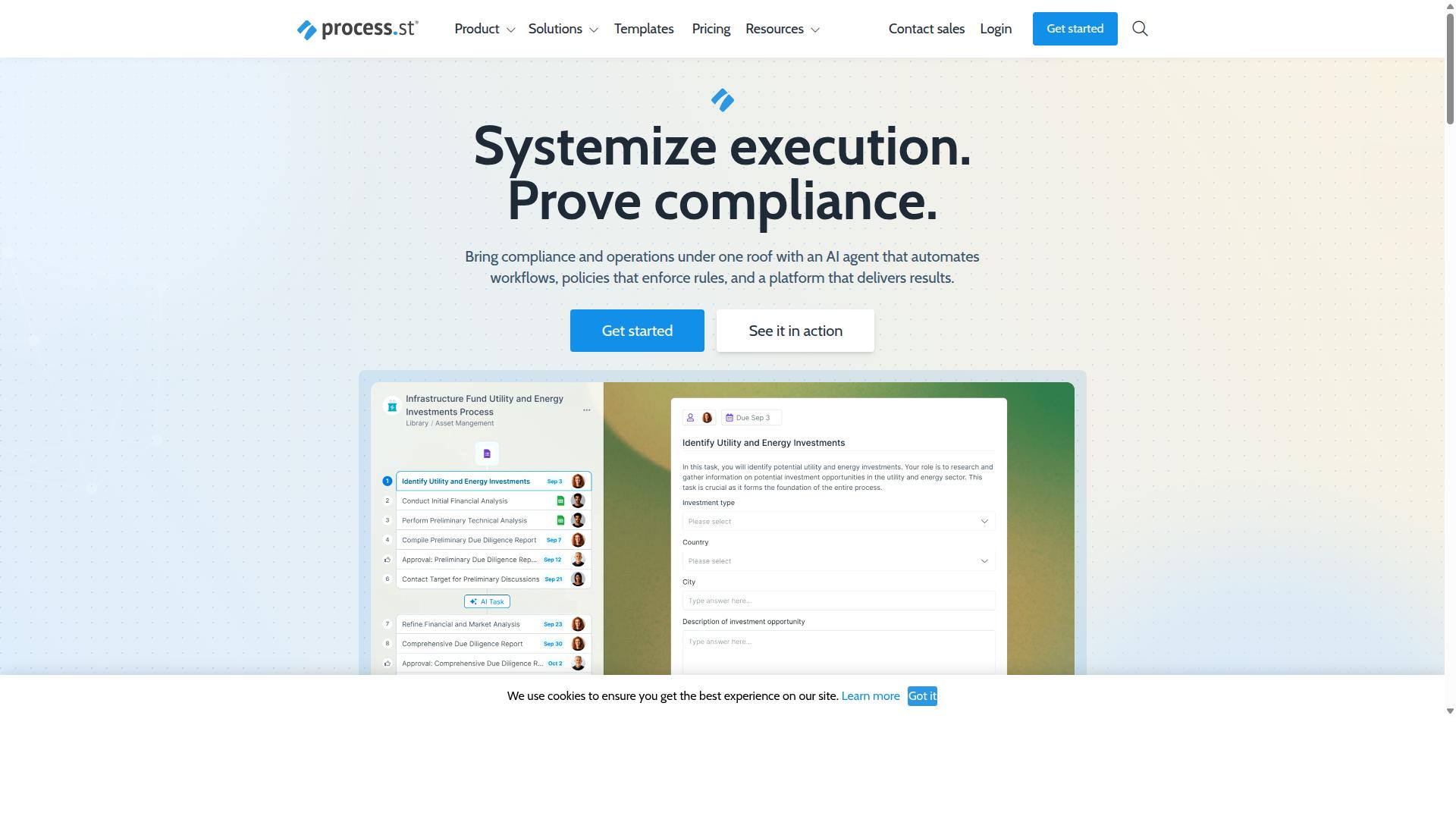
Process Street turns incident management into structured, audit-ready workflows that enforce policy at every step.
Incident workflows guide teams through standardized steps from initial report to resolution. Each workflow contains specific tasks, responsible parties, and required documentation.
Teams can build separate workflows for different incident types such as security breaches, system outages, or service disruptions.
Conditional logic adapts these workflows based on incident severity and type. For example, high-priority incidents trigger immediate escalation paths while routine issues follow standard procedures.
This flexibility ensures responses match the actual risk level without manual intervention at each decision point.
Approval chains require sign-off from designated stakeholders before closing incidents or making changes to affected systems.
These chains create clear accountability while preventing unauthorized actions that could compound problems or violate compliance requirements.
The platform records every action, decision, and approval in a complete audit trail. This documentation supports compliance with standards such as ISO 9001, SOC 2, SOX, and FDA regulations.
Process Street's Ops offering provides the workflow automation that turns these policies into executable processes.
The Cora AI compliance agent monitors these workflows continuously and flags potential risks before they escalate into larger issues.
Platform features such as Analytics give teams visibility into incident patterns and response effectiveness over time.
Integrations with Zapier, Microsoft Power Automate, Tray.io, Make, and public API access allow connections to existing ticketing systems and notification tools.
Organizations using Process Street for incident management gain standardized responses backed by documented procedures and full traceability from first report through final resolution.
Features Compared
Three core feature areas reveal clear differences between the two platforms.
Each comparison examines how Process Street capabilities stack up against ServiceNow's general positioning in incident management scenarios.
These distinctions matter most for teams that need structured workflows and compliance documentation built directly into their processes.
Workflow Automation & Policy Enforcement
Process Street embeds policy controls directly into automated workflows, ensuring every incident follows prescribed steps.
Conditional logic routes tasks based on incident severity and type. AI-powered task routing directs work to the right team members automatically.
SLA timers track deadlines throughout the incident lifecycle. These controls operate within Ops, the workflow automation platform that turns policies into AI-powered workflows.
ServiceNow's workflow designer offers similar automation options, though teams often spend more time configuring rules across multiple modules. Process Street keeps policy enforcement visible at each workflow stage.
Teams using Process Street report faster setup when standardizing incident response procedures across departments.
Compliance Documentation & Audit Readiness
Process Street captures evidence automatically, producing audit-ready reports without manual documentation.
Built-in audit trails record every action taken during incident resolution. Version history tracks changes to procedures and responses over time.
These features support SOC 2 Type II, ISO 27001, GDPR, and HIPAA requirements through Docs, the document management system with full governance capabilities. Exportable records eliminate the need to reconstruct timelines during audits.
ServiceNow maintains audit capabilities across its platform, though organizations often need additional configuration to match specific compliance frameworks. Process Street's approach centers documentation within each workflow from the start.
Multiple compliance certifications back this built-in approach for teams handling sensitive incident data.
AI-Powered Monitoring & Risk Detection
Process Street uses AI to surface high-risk incidents and recommend next actions based on historical patterns.
AI risk scoring evaluates incidents against past data to identify potential issues early. Anomaly detection flags unusual incident trends that may signal broader problems.
Cora, the AI compliance agent, monitors regulations and flags risks continuously. These capabilities work alongside Analytics to provide visibility into incident management performance.
ServiceNow includes general AI capabilities for monitoring and analysis. Process Street focuses AI specifically on compliance monitoring and risk identification within documented workflows.
Data used by these AI features never trains models on customer information, addressing privacy concerns common in incident management environments.
Pricing Compared
Process Street offers transparent, tiered plans while ServiceNow's enterprise licensing is typically quote-based. This difference becomes important when teams need clear cost visibility for incident management projects.
Startup plan includes 5 users and 10 guests with 100 automation actions per month. The plan also supports up to 10 automation apps and 50 Public API calls monthly.
Pro plan lifts these restrictions with custom user counts and unlimited automation actions. Teams get the full suite of automation apps and flexible API access for incident workflows.
Enterprise plan adds dedicated Success Manager support and custom Data Set records. Organizations receive priority support along with fully-managed workflow options and personalized training for complex incident management needs.
ServiceNow pricing requires individual quotes per instance or subscription agreement. This structure suits large enterprises but can create uncertainty for teams evaluating incident management tools.
Teams handling incident management often benefit from knowing exact costs upfront. Process Street's transparent approach helps organizations budget precisely for their incident response requirements without lengthy sales cycles.
Who Should Choose Process Street
Teams prioritizing fast setup, policy enforcement, and audit readiness gain the most from Process Street.
Compliance officers, operations managers, and HR professionals handle incident management daily. These roles require strict documentation standards and quick response protocols. Process Street supports their needs with built-in workflow automation and audit trail capabilities.
Financial services, healthcare, and professional services organizations face complex regulatory requirements. Incident management in these industries demands consistent processes and detailed records. The platform helps teams meet these standards through structured workflows and compliance features.
Teams achieve faster documentation and reduced setup time with Process Street compared to traditional enterprise solutions. This advantage helps teams respond quickly to incidents while maintaining compliance standards.
Process Street serves teams in operations, customer management, compliance, human resources, finance, IT, and security. These groups manage incident workflows across financial services, real estate, manufacturing, healthcare, professional services, technology, capital markets, and property management industries.
Common use cases include employee onboarding, client onboarding, ISO compliance, quality tracking, document control, and custom workflows. Each scenario benefits from the platform's approach to incident management and process standardization.
Who Should Choose ServiceNow
Large organizations needing deep ITIL alignment, extensive CMDB, and complex change-management workflows often select ServiceNow.
Global enterprises with mature ITSM practices typically require extensive customization capabilities. These organizations maintain complex infrastructure that demands detailed configuration management across multiple service relationships.
ServiceNow suits environments where formal change-management approval processes involve multiple stakeholders. Teams managing high-volume incident categorization alongside problem management benefit from its structured approach to ITIL frameworks.
Companies requiring comprehensive asset management alongside their incident management processes find value in mature CMDB functionality. ServiceNow provides extensive service catalog capabilities for organizations with established governance requirements.
Enterprises operating in regulated industries often need the compliance frameworks that ServiceNow supports. Organizations managing both cloud deployment and on-premise infrastructure across multiple regions appreciate its scalability options.
Teams with dedicated IT resources for ongoing customization work can maximize the platform's flexibility. ServiceNow works well when organizations need granular RBAC controls and detailed audit trail capabilities for compliance reporting.
Who Should Choose Process Street for Incident Management
Mid-market teams managing incidents under strict compliance regimes benefit most from Process Street's structured workflows. These organizations often operate with limited internal IT resources yet face the same regulatory requirements as larger enterprises. Teams in Operations and IT & security find the platform particularly valuable when incident volume stays manageable.
Process Street works well for teams processing under 500 incidents per month. This threshold allows organizations to focus on quality rather than scale. Financial services, healthcare, and professional services companies often fall into this category while maintaining complex compliance needs.
Teams requiring SOC 2 and GDPR audit trails gain immediate value from Process Street's built-in documentation capabilities. These organizations need clear records of every incident, escalation, and resolution action. The platform creates these trails automatically during workflow execution.
Organizations preferring sub-day setup avoid lengthy implementation cycles that disrupt operations. Process Street enables teams to begin incident management workflows within hours rather than weeks. This rapid deployment supports urgent compliance deadlines or regulatory deadlines.
Transparent pricing models help teams forecast costs accurately without hidden fees or usage-based surprises. Finance and compliance teams appreciate knowing exact expenses upfront when planning annual budgets. This clarity supports the decision-making process in resource-constrained environments.
Final Verdict
Process Street wins for teams that need fast, policy-driven incident management with built-in compliance proof. The platform delivers three decisive differentiators that reduce friction for incident response teams. These advantages become clear when comparing documentation speed, implementation effort, and security certifications.
Teams achieve 30 percent faster documentation through streamlined templates that capture incident details without extra steps. Setup takes 75 percent less time compared to traditional platforms, allowing IT teams to begin managing incidents sooner. The compliance package includes SOC 2 Type II plus ISO 27001 certification, which satisfies audit requirements without additional configuration.
ServiceNow provides enterprise-scale features for organizations with complex ITIL requirements. The platform handles extensive customization and integrates with large service catalogs. However, these capabilities come with longer implementation timelines and steeper learning curves for incident management teams.
Process Street offers direct contact with sales representatives for organizations evaluating incident management solutions. Support channels include email and chat with a five-minute average response time. Current users give the platform a 98 percent customer rating based on actual experience with incident workflows.
The choice between platforms depends on organizational size, compliance needs, and speed requirements. Teams prioritizing rapid deployment and policy enforcement find Process Street aligns better with their incident management goals. Larger enterprises with extensive customization needs may continue evaluating ServiceNow despite longer setup periods.
Recommended Resources: